Deftech6 topics
Defence technology software
Defence technology is software built for conditions ordinary product engineering assumes away: no reliable network, an adversary who is actively trying to break it, and a wrong output that costs far more than a bad quarter. This section covers 6 topics — drone software, command and control, computer vision, cybersecurity and data platforms — and what those three constraints change about architecture, testing and the definition of done.
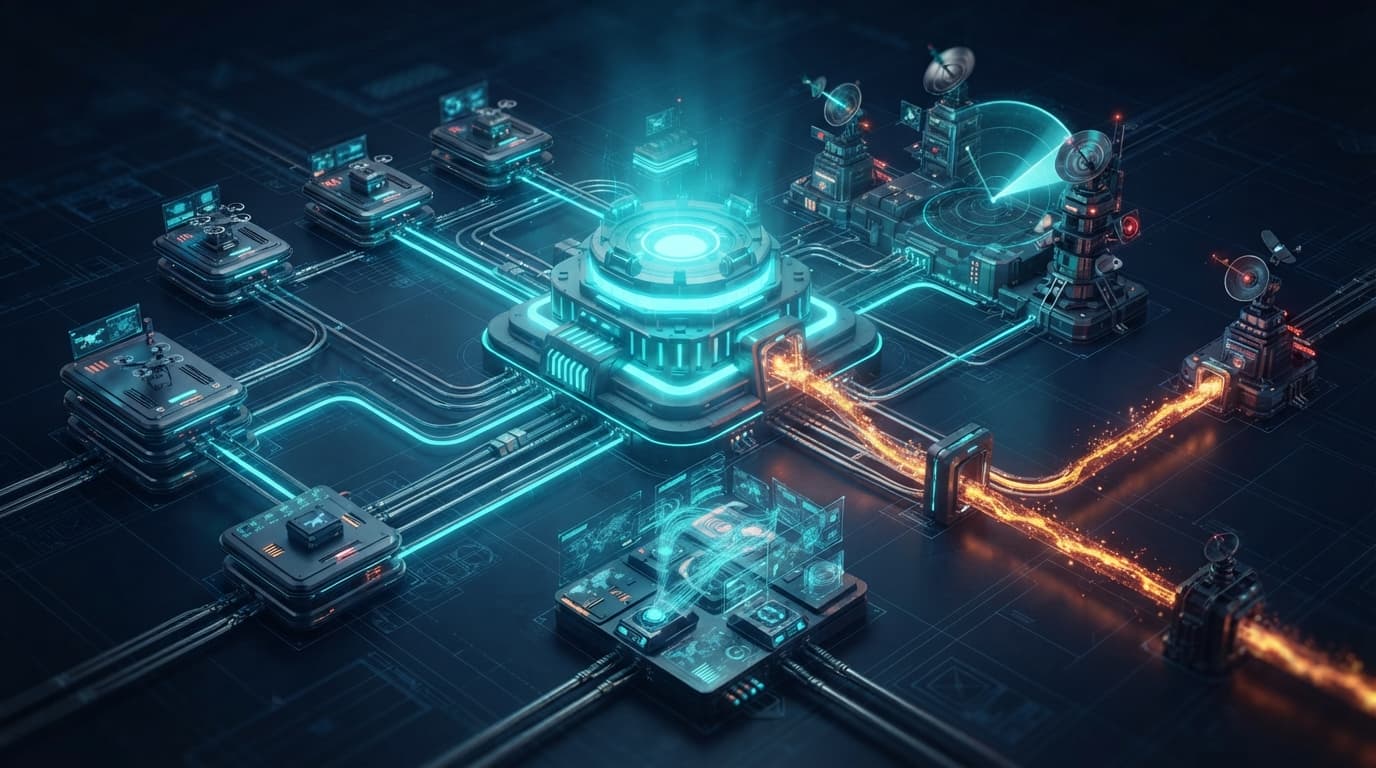
What is inside
Each area below is a group of topics. Open one to read its pages.
- OverviewThe constraints the other five share, and why they change ordinary engineering decisions.Start here
- Drone SoftwareAutonomy under a link that drops: what has to run on board, and what may wait for a human.AutonomyTelemetry
- C2 SystemsCommand and control: one shared picture assembled from feeds that disagree and arrive late.Shared pictureLatency
- Computer VisionDetection on limited hardware, and what a false positive costs when nobody can review it.Edge inferenceThresholds
- CybersecurityThreat modelling when the attacker is a funded organisation rather than an opportunist.Threat modelSupply chain
- Data PlatformsMoving and keeping data across networks that are intermittent, partitioned or hostile.SyncRetention
Where to start
- New to the domainThe overview first. It establishes the constraints every other page here assumes you have accepted.
- Coming from product engineeringCybersecurity is the sharpest contrast: the threat model, not the feature list, drives the architecture.
- Working on autonomyDrone software for what must run on board, then computer vision for what the model is allowed to decide.
Other sections
- DevelopmentSoftware development is the work of deciding where the boundaries in a system go, what runs on each side of them, and what moving one of those boundaries will cost once the code is live. This section covers 28 topics — architecture, the browser, five backend runtimes, four mobile platforms, language models and the databases underneath all of it. Every page turns on the constraint that actually separates the options, rather than on the API surface.
- InfrastructureInfrastructure is everything that turns code into something running that you can observe, change and roll back. This section covers 11 topics in four groups: DevOps and the pipeline that builds one artifact and promotes it unchanged, the three major clouds and how each contains a mistake, MLOps — the same problems again for a model instead of a binary — and the monitoring that makes an incident answerable at three in the morning.
Found this useful?
Share it with someone who is working on the same problem.